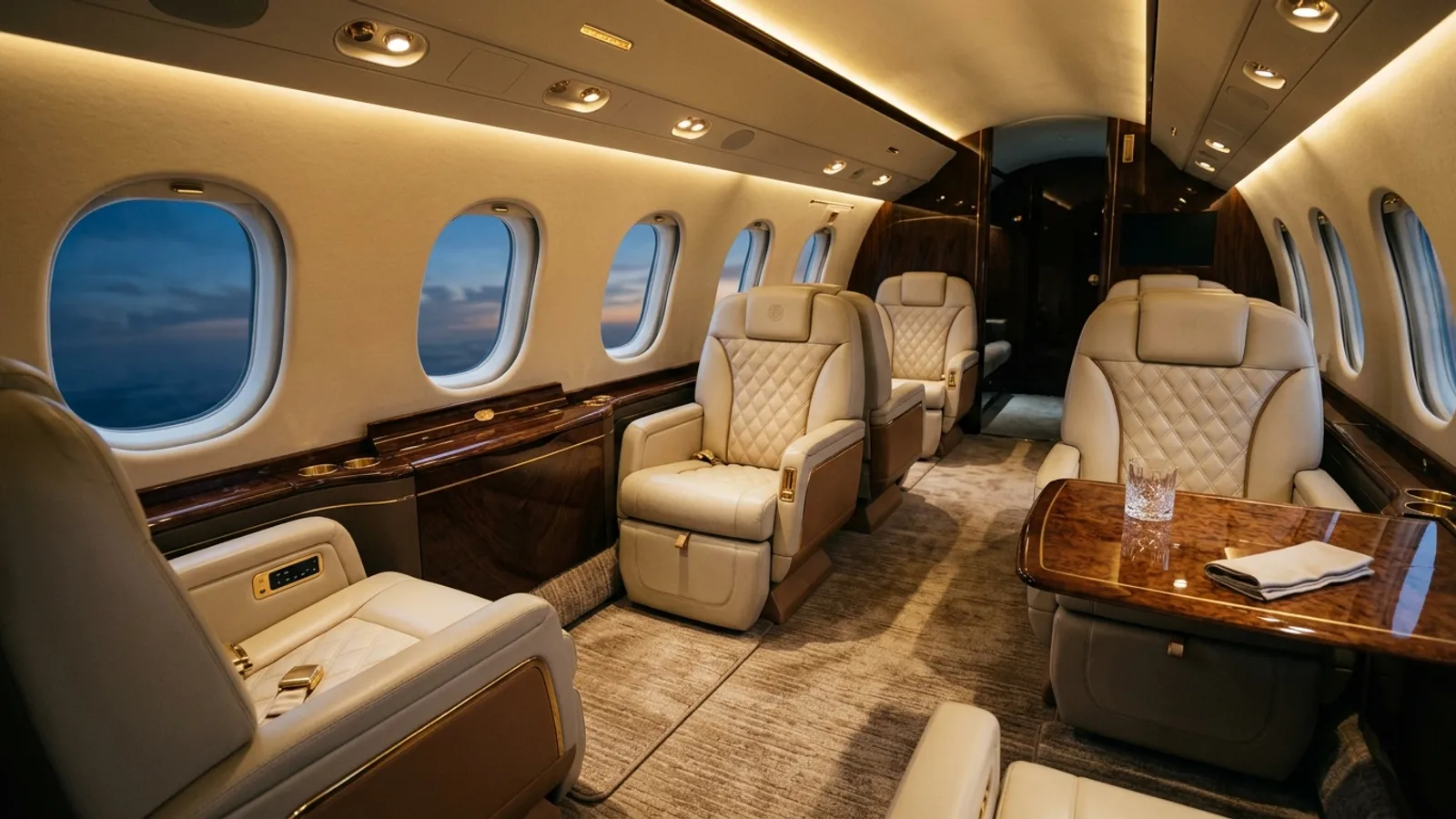
Why FBO transfers are different
A fixed-base operator (FBO) is the company an airport authorizes to handle private aircraft, and its private terminal is what general aviation passengers use instead of a commercial gate. That changes the whole shape of the ground transfer. There's usually no TSA checkpoint and no walk through a terminal, and where the FBO and the airport allow ramp-side access, a passenger can step off the aircraft and straight into a waiting car. The whole point of flying private is a seamless handoff from cabin to cabin, and the chauffeur is the other half of that.
Timing the pickup
Private schedules move on a wheels-up or wheels-down time and a tail number, not a commercial flight number, and they can shift with little notice. A provider used to private aviation tracks the aircraft by its tail number, or takes updates from the flight department when the owner has blocked public tracking through the FAA's LADD program, and stages the chauffeur at the FBO ahead of arrival, so the car is ready the moment the aircraft taxis in, not called after the fact.
Meeting at the FBO
Each FBO, and the airport it operates at, sets its own rules for ramp-side meet and greet: most need to clear the chauffeur and vehicle first and escort any car on the ramp, and some airports don't allow it at all. So the chauffeur checks in at the FBO's front desk and coordinates ramp access with staff there, and where the car can't go airside, the meeting point is the FBO lobby or entrance. Either way it's a short walk to the vehicle, luggage handled, no curb and no line. For departures, the same applies in reverse: the car pulls up to the FBO, not a terminal drop-off zone.
Coordinating with your flight department or broker
The details a chauffeur provider needs are simple, but they need to come from the right source:
- Tail number and the FBO name at each airport
- Estimated wheels-up or wheels-down time, and who to notify of changes
- Passenger count, luggage, and any crew who also need a car
- A single point of contact, whether that's an in-house flight department, a broker, or an executive assistant
Routing this through one contact on each side avoids the transfer becoming a game of telephone between passenger, broker, and driver.
Multi-leg trips and last-minute changes
Private travel changes plans more often than commercial does, an earlier departure, an added stop, a different FBO on short notice. A provider built for this kind of travel retimes the pickup to a changed arrival at no charge, re-quotes a new FBO or an added stop promptly, and can hold or reposition a vehicle without the passenger having to manage it themselves. Ask up front how changes to the date, pickup location or stops are priced.
Booking the ground leg
Ardenmile arranges FBO transfers at private terminals across the US. In metro Atlanta, where our team is based, private flights commonly use DeKalb-Peachtree (PDK), Fulton County Airport–Brown Field (FTY) or Cobb County International–McCollum Field (RYY), and private aircraft can also use Hartsfield-Jackson itself. Whether it's a single FBO transfer or every ground leg of a multi-city private itinerary, the request is the same: tail number, timing, and FBO, quoted as a fixed, all-in rate before you fly. At a private terminal, the grace period after landing is 30 minutes for international arrivals and 15 minutes for domestic ones. For teams that charter regularly, a corporate account keeps that coordination consistent across every trip.